Ice Road: building our 2026 winter blend
How we built this year's winter blend from a Guatemalan, a Sumatran and a little Huila, and why it is named after a road across a frozen lake.
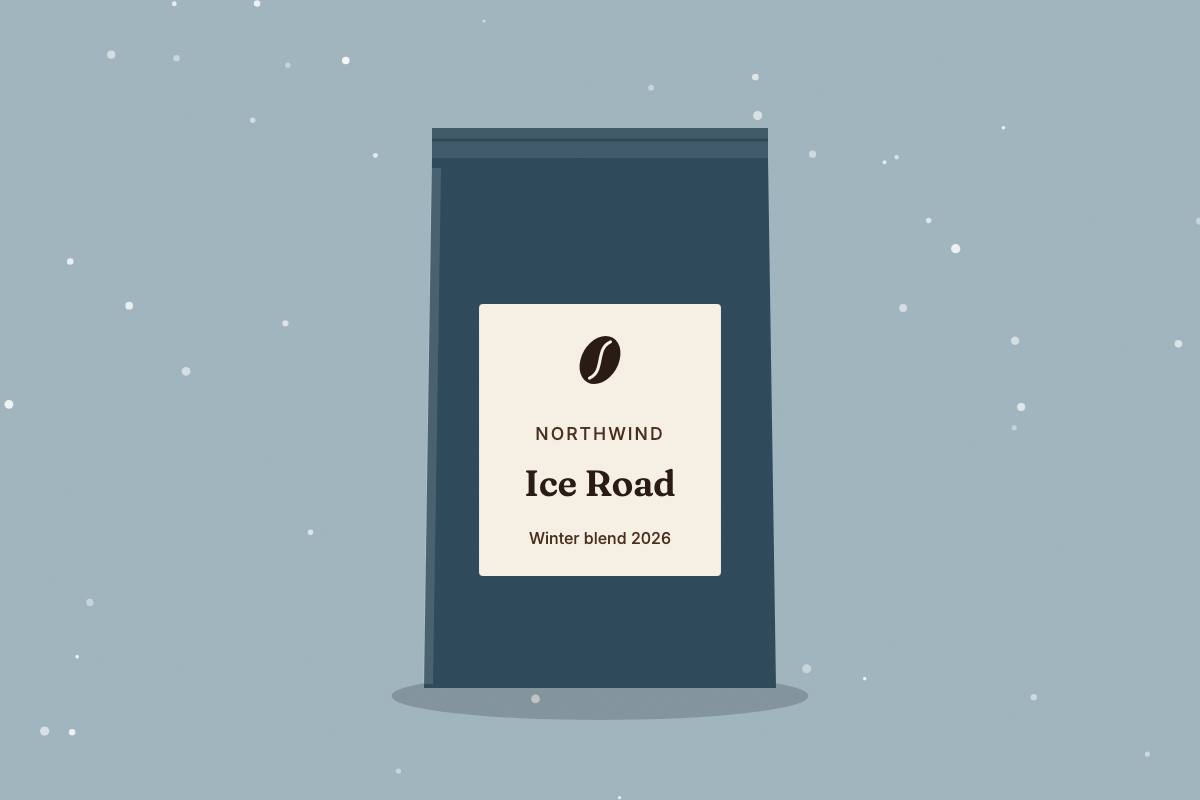
Every November we make one blend for the dark months, roast it until the bags run out, and never make it the same way twice. This year it is called Ice Road, after the road that opens across the frozen lake to Madeline Island in a cold winter.
What a winter coffee should do
It should be comforting without being boring. Winter coffee gets drunk in big mugs, often with milk, on mornings when it is still dark at eight. We want body, sweetness and something a little festive, without the cinnamon-and-nutmeg flavorings that seasonal coffees too often lean on.
The components
We started with Split Rock, the Guatemalan from Huehuetenango, for dark cherry and brown sugar. A wet-hulled lot from Aceh in Sumatra adds weight and a cedar, spicy depth. We tried it at thirty percent and it took over; at fifteen it sits underneath everything like a bass line.
The surprise was the last piece. A small amount of the Ramírez family’s washed coffee from Huila, the same farm we visited this summer, brightened the whole cup with red apple. Without it the blend tasted heavy by the second cup.
The final recipe is sixty percent Guatemala, twenty-five percent Colombia and fifteen percent Sumatra, roasted separately and blended after.
How to brew it
Ice Road is forgiving. It is excellent in a French press, good as a strong drip coffee, and holds up well in milk. As espresso it is chocolatey and a little wild; our baristas pull it as a short ristretto.
It is on the shelves at all three cafés and on the coffees page until the bags run out, which last year was the second week of February. Subscribers on the roaster’s choice plan will get it in their December delivery.